
Fairlight Primary’s journey to stronger language support with LanguageScreen
Fairlight Primary and Nursery School in Brighton has seen increasing numbers of children starting school with very poor oral language skills. Knowing a stronger focus on speech and language across the school was needed, they embedded LanguageScreen into their whole school speech and language programme. Jason Hammond, the school’s Speech and Language Specialist, says it has “changed our world here” and “made supporting our children so much easier.”
Here, Jason shares the school’s LanguageScreen journey and the impact on its pupils.
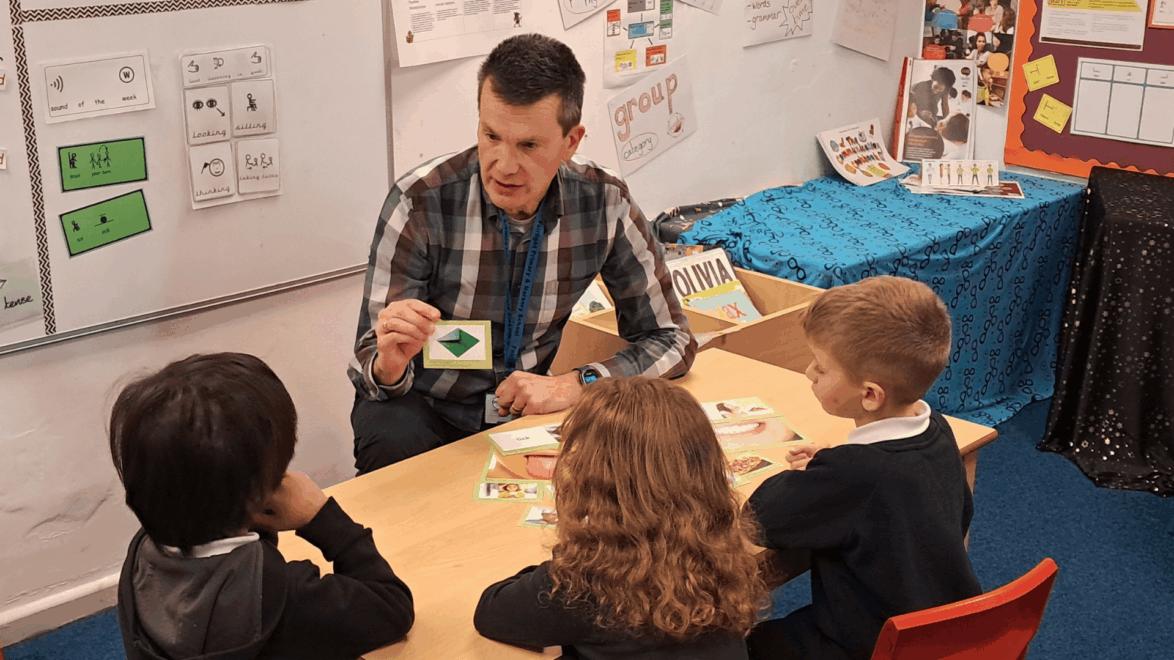
Why Fairlight uses LanguageScreen
Our inclusion team was very strong, but we were reliant on the services provided by the NHS. With referrals at an all-time high and increasing numbers of pupils coming into school with speech and language delays, we knew we needed to prioritise a school-based programme to ensure we could identify these pupils and support them as early as possible within school.
I first heard about LanguageScreen as part of the DfE-funded NELI programme. As soon as I used the assessment, I was impressed by how simple it was to administer. It has now become an integral assessment in our school. It’s the first port of call when we’re looking to ascertain if oral language is the root cause of a child’s difficulties, regardless of their key stage.
How Fairlight uses LanguageScreen
We assess all pupils when they enter reception, whether or not they have already been identified as having language delays. This means the school has a reliable and accurate measure of language ability right from the beginning, and ensures no pupil is missed.
Universal screening also means we can identify not just which pupils might need specialist support, but also those who may just need a little focused boost to help them catch up.
Pupils are then assessed with LanguageScreen in Years 1 and 2 to track their language development. We particularly like this continuity aspect – rather than using one assessment here and one assessment there, we can see the progress the pupils make and ensure they are developing as expected for their age.
I also use LanguageScreen in Key Stage 2 to support our decision-making. For example, if a child is new to the school, or is not progressing as expected, I assess them with LanguageScreen to see if they have a language delay before referring the child on to a speech and language therapist.
The LanguageScreen assessments inform how many children will receive intervention. In Reception, we use the NELI Intervention and in Year 1, we use TalkBoost. NELI is particularly beneficial for those students who need that focused support and it really boosts their skills and helps bridge that gap. We find many of these children don’t need additional intervention after NELI. We use TalkBoost in Year 1 with those children who still need additional language support after NELI.
The benefits of LanguageScreen
Quick and easy to use
I like how the assessment is very quick to administer. The individual test scores usually provide me with all the information I need, although I will often make small comments as I go through the assessment, which are really helpful when I come back to reassess the pupils at the end of the year.
Simple and standardised
One of the key things that I like about LanguageScreen is that it is standardised, which not many language assessments are. This means I can be confident when I am comparing my start and end-of-year assessments, as well as when tracking pupil’s progress through Early Years. Standardisation also makes it easy to see if an intervention has worked or not – it allows me to prove I’m doing a good job.
Clear and tangible results
The four subtest areas help identify what pupils struggle with the most so we can better support them in the classroom. The detailed breakdown of their results, along with the reporting provided, not only supports our decision making, but allows us to have date-informed conversations with parents, speech language therapists, and other stakeholders.
For example, we recently had a pupil in Year 4 whose parents were concerned about their language development. I was able to send the language assessment graphs home, explain what the percentiles mean, and reassure them that for their child’s age, their language is not a concern.
Using LanguageScreen to support speech language therapists
We also use the LanguageScreen assessment to help reduce the pressure on our NHS speech language therapists.
The quick, practical, and school-based nature of the assessment allows us to filter out the pupils who will benefit from programmes in school from those who need referrals to the NHS. This allows an already overwhelmed sector to focus on the pupils who need the most support.
We use the LanguageScreen results in our review meetings with our speech language therapists and to support referrals to their team. We find these help them decide which pupils to focus on that term and which additional tests to administer. It helps us to make the right decisions in terms of support.
The overall impact of LanguageScreen
Because of LanguageScreen, we have more data-informed conversations, can demonstrate the effectiveness of the work we’re doing across the speech and language programme, and provide much-needed support to our overstretched NHS therapists.
With the number of pupils in our schools needing language support at an all-time high, and LanguageScreen being available to all primary schools through DfE funding, I would recommend all schools use this assessment.